
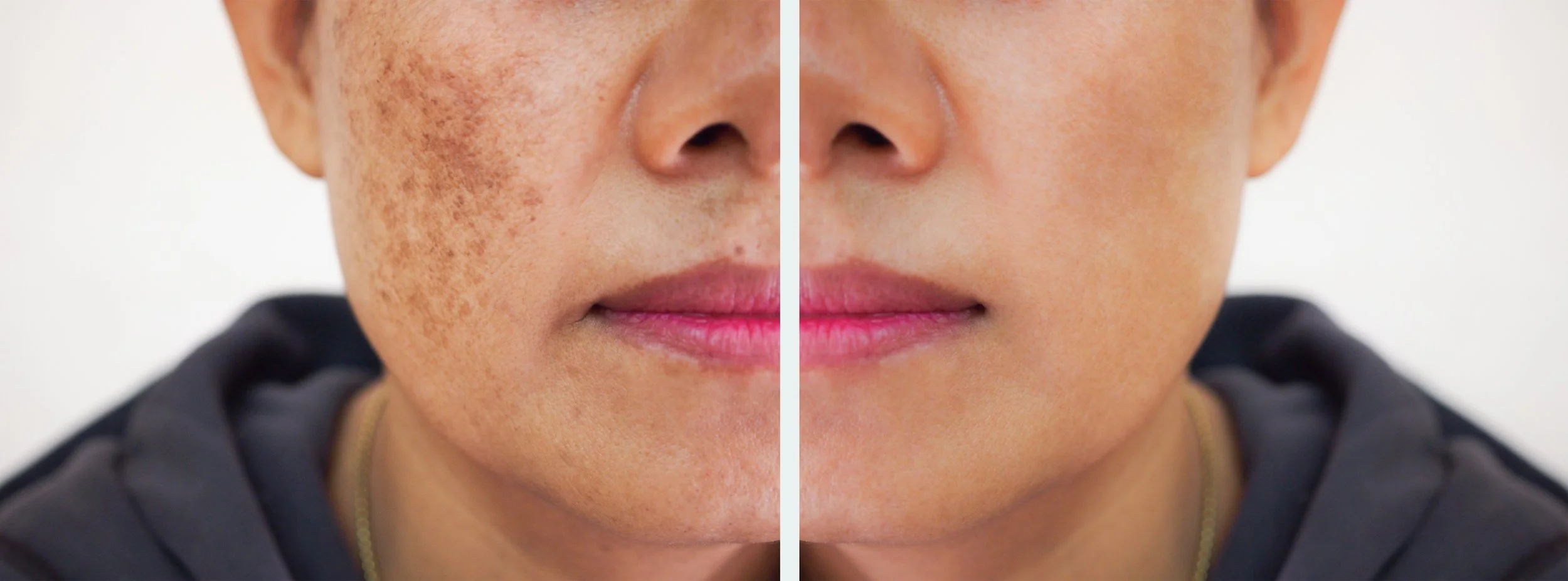
Hyperpigmentation Treatment
What causes skin hyperpigmentation?
Skin hyperpigmentation occurs when certain areas of the skin produce more melanin than usual, leading to dark spots or patches. Several factors can cause this, including:
-
Ultraviolet (UV) rays stimulate melanin production, which acts as a natural defense to protect skin from sun damage. Overexposure can result in sunspots or age spots.
-
Conditions like melasma, often triggered by pregnancy or oral contraceptive use, result from hormonal imbalances that affect melanin production.
-
Post-inflammatory hyperpigmentation (PIH) can occur after skin injuries or conditions such as acne, eczema, or psoriasis.
-
Certain drugs, such as chemotherapy agents, can cause hyperpigmentation as a side effect.
-
Some people are genetically predisposed to conditions like freckles or other pigmentation disorders.
-
As skin ages, it may develop areas of hyperpigmentation due to accumulated sun exposure or the slower regeneration of skin cells.
Treatment Options
Intense Pulsed Light (IPL)
Intense Pulsed Light (IPL) treatment, also known as photofacial or fotofacial, is a popular non-invasive cosmetic procedure used to improve the appearance of the skin. It utilizes high-intensity light waves to target various skin concerns, such as sun damage, age spots, acne, redness, and uneven pigmentation. IPL works by emitting multiple wavelengths of light that penetrate the skin and target specific chromophores, such as melanin (responsible for pigmentation) and hemoglobin (responsible for blood vessels). The light energy is absorbed by these chromophores, effectively breaking down the targeted pigment or coagulating blood vessels, leading to a more even skin tone and reduced redness. IPL treatment is commonly used on the face, neck, chest, and hands, and it is known for its ability to provide a more youthful and radiant complexion without the need for surgery or lengthy downtime.
The procedure is generally quick and relatively painless, with patients often describing the sensation as a mild snapping feeling or a sensation of warmth on the skin. IPL treatments are customizable to address specific skin concerns, making it a versatile option for individuals seeking to improve the overall texture and tone of their skin. Additionally, IPL therapy stimulates collagen production, which contributes to firmer, smoother skin over time.
PicoLazer
PicoLazer treatment for melasma is a non-invasive procedure that uses ultra-short pulses of laser energy to target and break down excess melanin in the skin. This advanced laser technology minimizes heat damage, reducing the risk of hyperpigmentation while promoting faster recovery. It is highly effective for melasma, as it can safely treat darker skin tones and stubborn pigmentation. Multiple sessions may be required.


-
Contraindicated if:
o Are pregnant or Breastfeeding
o Anaphylactic reaction to any of the other Neurotoxins
o Active infection at treatment site
o Taking chemotherapy or immunosuppressive drugs
Do NOT consume alcoholic beverages at least 24 hours prior to treatment (alcohol may thin the blood and increase the risk of bruising)
Avoid anti-inflammatory/blood thinning medications, if possible for a period of 2 weeks before treatment. Medications and supplements such as aspirin, vitamin E, ginkgo biloba, ginseng, St. John’s Wort, Omega 3/Fish Oil supplements, Ibuprofen, Motrin, Advil, Aleve and other NSAIDS have a blood thinning effect and can increase the risk of bruising and swelling after injections.
Schedule your appointment(s) at least 2 weeks prior to a special event which you may be attending, such as a wedding or a vacation. Results from neuromodulator injections will take approximately 4 to 14 days to appear.
Reschedule your appointment at least 48 hours in advance if you have a rash, cold sore or infection on the treatment area.
-
Immediately after treatment, there should be erythema (redness) and edema (swelling) at the treatment site, which should subside up to 48 hours after the treatment. The treated area may feel like a sunburn for a few hours after treatment. Your provider may use an optional cooling method immediately following treatment to ensure your comfort.
A topical soothing skin care product such as aloe vera gel may be applied following treatment if desired.
Avoid sun exposure for 2-weeks to reduce the chance of hyperpigmentation (darker pigmentation).
Always use sunblock (SPF 30+) throughout the course of treatment.
The treated pigment may appear darker immediately and within the first few days following treatment.
The darkened pigment will flake off like dry skin within 7-10 days.
Avoid picking or scratching the treated skin.
There are no restrictions on bathing except to treat the skin gently, as if you had a sunburn, for the first 24 hours.